

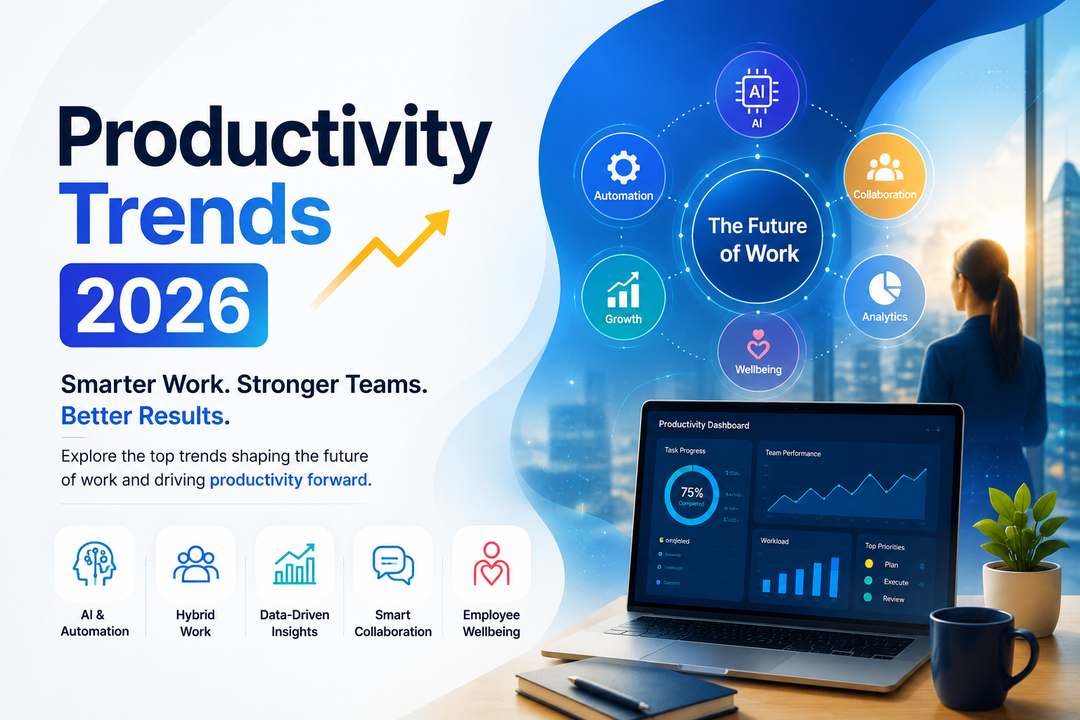
Never before has productivity remained static. Each generation defines productivity differently, and so has the current generation of workers witnessed another change in the workplace. Productivity in 2026 will not be based on the number of hours spent sitting at one’s desk or the number of meetings scheduled on one’s calendar. Organizations are now more concerned about productivity through results and efficiency.
With the rise in the usage of digital technologies, changes in the demands of the workers, and shift in the objectives of firms, a new world of productivity has emerged. Firms are equipping themselves with the use of technology that will cut down redundant tasks, promote teamwork, and take care of the well-being of the employees. Simultaneously, individuals are becoming very conscious about the utilization of their time, energy, and attention.
All these trends have been impacting all aspects of the workplace from project management to communication, from leadership to corporate culture. Knowledge of the latest productivity trends can be quite helpful for companies as far as improving efficiency and making a pleasant environment for the employees is concerned.
Why Productivity Trends 2026 Look Different Today
The old productivity perspective was based almost entirely on doing things. The expectation was for employees to be busy, quick, and visible all day long. Though this way of thinking ensured accountability, it tended to reward activity rather than real productivity.
In today’s business world, people know that being busy doesn’t automatically translate to being productive. Productivity is now measured by results, creativity, and value creation.
From Activity to Impact
Performance of contemporary companies is geared towards result-oriented efforts. Groups are supposed to focus on tasks which add value to the company rather than engaging in meaningless activities.
It helps the employees to concentrate on important tasks without being burdened by meaningless tasks.
Technology Is Changing the Expectations
With the advent of technology, there has been a change in the way work is done. Hours-long processes have become minutes-long due to technological advances.
Thus, productivity is not based on efforts but on effectiveness.
Artificial Intelligence Is Reshaping Daily Work
One of the most important productivity trends for 2026 is the incorporation of artificial intelligence within daily operations. Artificial intelligence is no longer seen as a nascent technology. Instead, it has been developed into a useful business tool used by workers in different roles.
Companies utilize AI in order to streamline repetitive processes, make better decisions, and increase productivity.
Reducing Time Spent on Repetitive Tasks
Administration takes away precious time that could have been used for strategic actions. Automated systems powered by artificial intelligence can manage tasks such as planning, entering data, organizing documents, and communicating without much human intervention.
This will enable people to focus more on creative solutions.
Faster Access to Information
AI systems in today’s world have the ability to analyze massive amounts of data within seconds. People don’t need to go through reports and databases; they just get the information they require instantly.
Supporting Human Creativity
Contrary to popular worries, artificial intelligence is not taking over human creativity; it is boosting it. Professionals are leveraging AI technologies to come up with new ideas, conduct research, summarize information, and manage tasks.
Flexible Work Models Continue to Evolve
Flexible working styles have come to stay in today’s work environment. What was initially seen as a necessity has now become an asset for many businesses.
Organizations are beginning to realize the benefits that come from being flexible.
Hybrid Work Is Becoming the Preferred Approach
Numerous experts invest significant daily time answering texts, joining sessions, and managing disruptions. Even though contact matters, perpetual reachability hampers concentrated labor efforts.
Asynchronous collaboration is emerging as a practical solution.
Creating More Time for Deep Work
Rather than needing instant replies, groups utilize common files, videoed notes, and task tracking systems to share data.
This method lets staff interact with changes when it suits their timetables, generating additional unbroken periods for concentrated labor.
Better Documentation Leads to Better Decisions
Companies are putting more focus on recording procedures, choices, and project changes.
Good records lower confusion, raise clarity, and make sure data stays open for all people.
Supporting Distributed Teams
When companies grow worldwide, asynchronous messaging allows groups to work together through various time zones while not losing efficiency.
Employee Well-Being Has Become a Productivity Priority
For years, workplace well- being was seen as distinct from productivity initiatives. This view shifted greatly. Firms now see worker output linked closely to physical, mental, and emotional health states.
Burnout Has Real Business Costs
Too much work, steady stress, and no life balance cause burnout. Burnout hurts focus, imagination, and total results.
Companies are making active moves toward building better workplaces.
Sustainable Productivity Is Replacing Hustle Culture
Concept that staff need always labor extended times to achieve success is slowly vanishing.
Companies are pushing for real tasks, loose times, and good limits which help long term results.
Mental Health Support Is Becoming Standard
Workplace productivity strategies now see employee assistance programs, wellness initiatives, and mental health resources as essential components increasingly.
Productivity Platforms Are Becoming Smarter
On average, employees interact with many apps daily. Continually moving among separate tools may cause needless friction and lower productivity.
Contemporary work systems solve this issue via connection and automatic processes.
Centralized Work Management
Groups are now using more often systems which merge work control, teamwork, talking, and reporting inside one place.
This brings about higher visibility and lessens the requirement to look through many separate systems.
Workflow Automation
Automation helps firms remove repetitive tasks including assignment duties, reminder notices, status reports, and approval chains.
This leads to quicker running time and less manual mistakes.
Improved Visibility Across Teams
Combined platforms give directors immediate views on task advancement, asset distribution, and group results.
Deep Work Is Returning to the Spotlight
Even though tech advances exist, one issue still hurts work output: distraction.
Alerts, mailings, gatherings, and online networks may break focus and lower productivity levels.
Consequently, numerous experts are adopting the notion of deep labor.
Why Focus Matters More Than Ever
Complicated jobs need long focus time. Good results usually rely on steady blocks of attention.
Companies are seeing the worth of guarding concentrated periods.
Reducing Digital Distractions
Staff members utilize methods including time blocking, notification control, and specific focus periods to enhance attention spans.
Prioritizing Meaningful Work
Instead of gauging output via task quantity, experts are centering attention on labor yielding substantial effect.
Data Is Driving Productivity Decisions
Current workplaces possess greater amounts of information data than previously available.
Rather than depending on guesses, managers may apply data analysis to learn how tasks finish and identify areas needing betterment.
Identifying Inefficiencies
Data on productivity might show bottlenecks which make projects slower or cause extra workloads to form.
Addressing these challenges can significantly improve operational performance.
Improving Resource Allocation
Analytics assist managers to see which areas require resources most so that groups stay efficient yet not overloaded.
Continuous Improvement Through Measurement
Groups now often apply information to judge operations and create continuous changes which boost effectiveness.
Personalized Productivity Is Gaining Momentum
A very notable job shift involves knowing work speed differs across people.
Distinct individuals operate in various ways, so firms adjust methods to match these differences.
Flexible Work Styles
Certain staff members function optimally within cooperative settings, whereas distinct individuals achieve superior results when engaged in solitary tasks.
Companies build frameworks to fit varied work choices.
Technology Supporting Individual Needs
Current productivity software lets people tailor processes, alerts, and job control setups to fit how they work best.
Moving Beyond One-Size-Fits-All Solutions Companies see that adaptability usually wins over strict efficiency models.
The Future of Productivity Will Focus on Balance.
Most effective groups realize productivity exceeds mere efficiency. They build spaces allowing staff to excel without harming health.
Tech will keep playing a big part in work output, yet human elements like inventiveness, teamwork, flexibility, and attention will stay just as vital.
Companies which adopt both innovation and staff assistance shall be situated better to reach sustainable expansion during coming years.
Conclusion
Productivity patterns defining 2026 show a wider shift in how labor gets arranged, tracked, and controlled. Machine learning, adaptable job setups, staff health programs, evidence-based choices, and better teamwork methods are changing what counts as work achievement.
Instead of concentrating just on performing extra tasks, groups are studying ways to execute superior labor. Tomorrow favors enterprises able to merge tech, planning, and people-focused methods to build effective, strong, and involved squads.
FAQS
1. What are productivity trends?
Workplace efficiency patterns include fresh methods, tools, and plans aiding staff to operate with greater speed. These indicate how firms and workers adjust to shifting conditions and demands.
2. How is AI improving productivity?
Artificial intelligence aids automation of repetitive duties, organizing data, and aiding decisions. This lets staff spend extra time on creative, strategic, valuable work rather than routine admin tasks.
3. Does remote work increase productivity?
Working from home may boost output levels since it cuts travel hours and offers more schedule freedom. With good messaging channels and proper software available, staff members frequently reach higher concentration points alongside improved personal equilibrium states.
4. What is deep work?
Deep work means focusing on key tasks with no interruptions. This aids better attention, raises job standard, and lets experts finish hard jobs faster.
5. Why is employee well-being important for productivity?.
Workers feeling healthy, supported, and motivated tend toward higher productivity levels. Prioritizing well-being may lower burnout rates, boost engagement figures, and aid better long-term performance outcomes.
6. What is asynchronous collaboration?
Remote teamwork lets individuals talk and finish work when they are not logged in together. This cuts down on breaks and helps efficiency over varied timetables and global locations.
7. How do productivity tools help businesses?
Task management, communication, and collaboration get simplified by productivity tools. These aids let teams remain organized, cut down on manual labor, and boost general efficiency within projects and everyday routines.
8. Do productivity patterns remain identical across all sectors?
No. Although certain patterns hold generally, sectors implement efficiency approaches according to their distinct requirements, objectives, and operational workflows. The most successful patterns differ between each individual entity.