

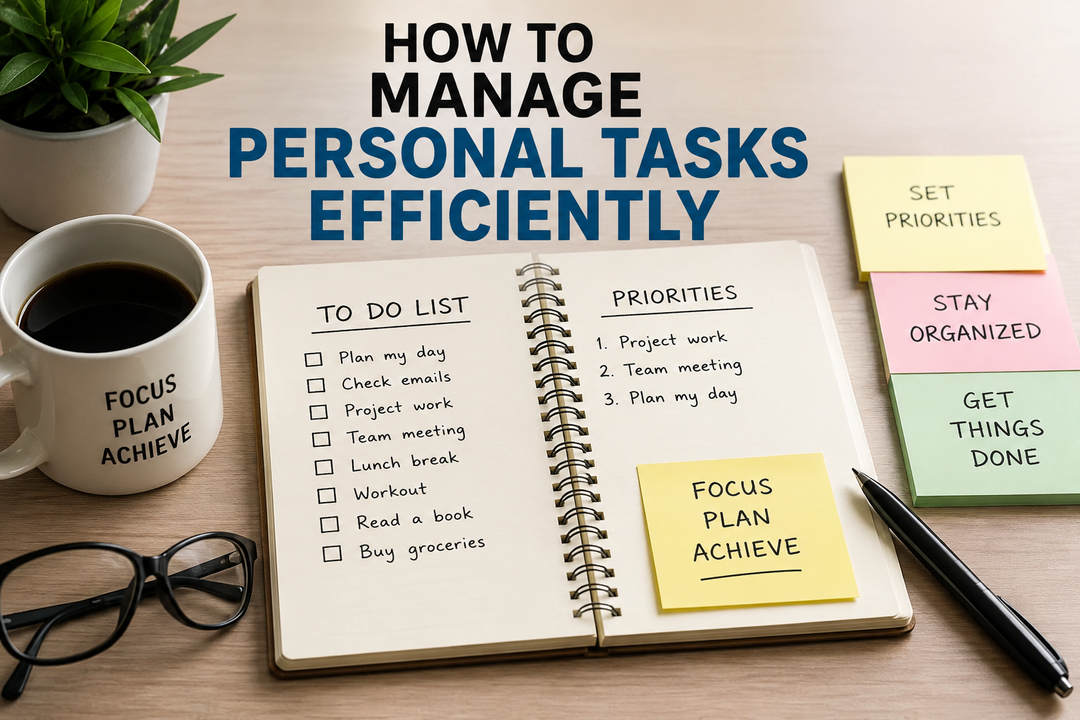
Most people don’t struggle because they have too much to do.
They struggle because they don’t know how to manage what they have.
You start the day with a plan. Maybe even a to-do list. But as the day moves forward, things change. New tasks come in. Priorities shift. Some work gets delayed.
By evening, you feel tired… but not satisfied.
That’s a common experience.
Efficiently managing personal tasks is not about doing more work.
It’s about doing the right work, in the right way, at the right time.
Let’s break down how you can actually make that happen.
Why Personal Task Management Matters
When tasks are not managed properly, your mind stays busy all the time.
You keep thinking:
- “Did I forget something?”
- “What should I do next?”
- “Is this urgent?”
This mental load creates stress.
Good task management removes that pressure. It gives your day structure. It helps you focus.
And most importantly, it makes your progress visible.
1. Start with a Clear Task List
Everything begins with writing things down.
Don’t try to remember tasks in your head.
Instead, create a simple list of everything you need to do work tasks, personal tasks, small things, big things.
At first, it might feel messy.
That’s okay.
The goal is not perfection.
The goal is clarity.
Once tasks are written down, your mind feels lighter.
2. Prioritize What Actually Matters
Not all tasks are equally important.
Some tasks:
- Move your work forward
- Create real impact
Others are just routine.
If you treat everything as equal, you lose focus.
A simple way to prioritize:
- High priority: Must be done today
- Medium priority: Important but can wait
- Low priority: Optional or flexible
This helps you focus your energy where it matters.
3. Break Big Tasks into Smaller Steps
Big tasks often feel overwhelming.
“Prepare report”
“Plan event”
“Finish project”
These are not clear tasks. They are broad goals.
Break them into smaller steps:
- Gather data
- Create outline
- Write draft
- Review
Small tasks are easier to start.
And once you start, momentum builds naturally.
4. Avoid Multitasking
It may feel like multitasking saves time.
But in reality, it slows you down.
When you switch between tasks:
- Focus breaks
- Mistakes increase
- Time is wasted
Instead, try working on one task at a time.
Finish it. Then move to the next.
Simple, but powerful.
5. Set Realistic Deadlines
Many people overload their day.
They plan 10 tasks… but realistically can complete only 5.
This creates frustration.
Instead:
- Be honest about your time
- Give space between tasks
- Avoid overplanning
Completing fewer tasks fully is better than leaving many incomplete.
6. Use a Simple Task Management System
You don’t need something complicated.
It can be:
- A notebook
- A digital app
- A simple checklist
What matters is consistency.
Choose one system and stick to it.
Switching between multiple tools creates confusion.
7. Review Your Tasks Daily
At the end of the day, take a few minutes to review.
Ask yourself:
- What did I complete?
- What is pending?
- What should I do tomorrow?
This habit keeps your work organized.
It also gives a sense of closure.
8. Learn to Say No
Not every task deserves your time.
Sometimes, we say yes to things out of habit or pressure.
But too many commitments lead to overload.
Before accepting a task, ask:
- Is this important?
- Do I have time for it?
Saying no when needed protects your focus.
9. Keep Your Tasks Visible
When tasks are hidden, they are easily forgotten.
Keep your task list somewhere visible:
- On your desk
- On your phone
- On your laptop
Seeing your tasks regularly keeps you aligned.
10. Focus on Progress, Not Perfection
Many people delay tasks because they want everything to be perfect.
But perfection slows you down.
Instead:
- Start small
- Make progress
- Improve along the way
Done is better than perfect.
11. Take Breaks When Needed
Working continuously doesn’t mean working efficiently.
Short breaks help:
- Refresh your mind
- Improve focus
- Reduce stress
Even a 5–10 minute break can make a difference.
12. Build Consistent Habits
Task management is not a one-time activity.
It’s a daily habit.
Small actions like:
- Updating tasks
- Checking priorities
- Reviewing progress
These habits create long-term improvement.
How Taskity Can Help with Personal Tasks
Most people don’t realize how tiring small unfinished tasks can become.
Replying to a message later. Paying a bill tomorrow. Remembering something important for next week. Individually, these things look small. But when they keep sitting in your mind, they slowly start creating pressure.
That’s usually when people begin searching for a better way to stay organized.
Taskity can help make that process easier.
Instead of depending on memory or writing tasks in random places, you can keep everything together and manage it more clearly. Whether it’s planning your day, tracking pending work, or simply organizing personal routines, having one space for everything makes a noticeable difference.
What many people like is the simplicity.
You open your tasks, check what needs attention, and continue your day without overthinking too much. There’s no need to maintain complicated systems or spend time figuring out difficult setups.
For someone handling work, family responsibilities, personal goals, or everyday reminders, even basic organization can reduce a lot of unnecessary stress.
Another helpful thing is visibility.
When your tasks are clearly listed, your day feels more manageable. You stop constantly trying to remember everything. Instead of mental clutter, there’s more clarity.
And honestly, that changes how your day feels.
You become less reactive. You plan better. Small pending work stops turning into last-minute pressure.
At the end of the day, managing personal tasks is not really about being “busy” all the time. It’s more about creating a routine that feels organized and realistic.
Sometimes even a small habit like checking your tasks in the morning or updating completed work at night can make everyday life feel much more under control.
Common Mistakes to Avoid
Even with good intentions, people make mistakes like:
- Keeping tasks only in memory
- Not prioritizing
- Overloading the day
- Ignoring deadlines
- Switching systems frequently
Avoiding these mistakes makes task management easier.
What Changes When You Manage Tasks Efficiently
When you manage tasks properly, things feel different.
You:
- Start your day with clarity
- Know what to focus on
- Complete tasks with confidence
- Feel less stressed
Work becomes more structured.
And life feels more balanced.
Final Thoughts
Efficient task management is not about working harder.
It’s about working smarter.
When you:
- Write tasks clearly
- Prioritize properly
- Stay consistent
You gain control over your time.
And when you control your time,
you control your progress.
Start small.
Stay consistent.
And you’ll see the difference.
FAQs
1. What are personal tasks?
Personal tasks are everyday activities that individuals need to complete in their daily life.
2. How can I manage personal tasks effectively?
You can manage personal tasks by organizing them, setting priorities, and tracking progress regularly.
3. Why is managing personal tasks important?
It helps improve productivity, reduce stress, and maintain a balanced routine.
4. What is the best way to organize personal tasks?
Using a simple task list and prioritizing important work is the best approach.
5. How do I prioritize personal tasks?
Focus on tasks based on importance and urgency.
6. Can task management improve personal productivity?
Yes, it helps you stay organized and complete work efficiently.
7. What mistakes should I avoid in managing personal tasks?
Avoid overloading tasks, not prioritizing, and not tracking progress.
8. How often should I review personal tasks?
You should review your personal tasks daily for better planning.