

Out of nowhere, today’s companies keep shifting shape. Not long ago, team setups looked completely different. Smart tech now fills workplaces. Working from home shows up more often. Machines handle routine jobs step by step. A quiet push runs through firms - do things quicker, do them right.
These shifts mean that by 2026, how companies are run leans hard into doing things better - think quicker results, sharper methods, less wasted time. A shift shows up quietly at first, then defines entire years. Smarter moves matter now simply because standing still isn’t an option anymore.
Profit isn’t the only thing on a company’s mind now. What matters just as much? How well people work together, share ideas, stay connected across distances, adjust when things shift suddenly - technology helps here - and keep customers feeling heard. Sticking to old ways can quietly chip away at a business, leaving it out of step while others move ahead without looking back.
Picture what's unfolding across offices next year - new ways of running businesses start to take hold. Work shifts because of it. Instead of old routines, leaders lean into tools that think ahead. Change arrives quietly through daily habits remade. Investment pours in, not by accident, but because smoother operations pay off. Behind every upgrade, a reason hides: stay relevant or fall behind. What sticks isn’t flashy - it just works.
Business Management Trends Explained
What firms adopt today often shifts how work gets done tomorrow. New methods pop up through software, habits, routines inside offices. Tools change, roles adjust, systems update without warning. Improvement hides in small changes nobody talks about much. Ways of organizing people keep evolving quietly behind screens.
These trends help businesses:
- Improve productivity
- Manage teams better
- Save time
- Reduce costs
- Improve communication
- Increase efficiency
- Support remote work
- Make smarter decisions
Change hits offices each year. Because of that, companies find new ways just to keep up.
Flexibility takes center stage for businesses in 2026. Automation follows close behind, shaping how work gets done. Collaboration thrives where teams adapt quickly. Employee well-being becomes a quiet priority, woven into daily operations. What changes is how these pieces fit together.
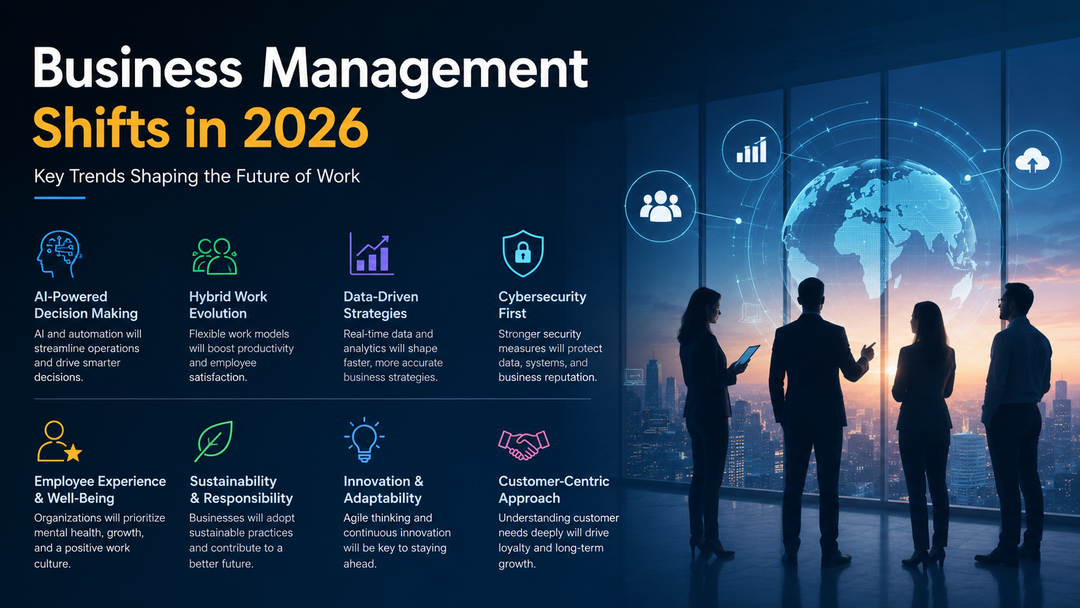
Business Management Shifts in 2026
Several major changes are shaping modern businesses today.
Remote and Hybrid Work
Many employees now work from:
- Home
- Shared offices
- Different cities
- Different countries
Firms now face a push toward stronger ways to connect and work online. Tools that help teams talk and build together are becoming essential pieces of daily effort.
Faster Technology Growth
Faster machines think on their own now, quietly changing how things run. Work flows smoother because computers handle tasks once done by hand. These shifts happen without loud announcements, just steady updates behind the scenes. Tools online adapt quickly, helping companies move with less effort.
Employee Expectations
Employees now expect:
- Flexible schedules
- Better communication
- Simpler workflows
- Modern tools
- Better work-life balance
When firms overlook what workers expect, they usually face high turnover. Retention becomes tough if those needs are ignored. People leave more often when their concerns get brushed aside. Staying power drops where attention fades from staff priorities. Keeping team members grows harder without meeting common demands.
Increased Competition
Staying ahead means moving quickly, yet thoughtfully, alongside rivals. With clearer ways to handle tasks, firms often find themselves running smoother each day.
Business Management Shifts 2026
Let’s explore the biggest trends shaping businesses this year.
AI and automation are now essential.
By 2026, machines that think are reshaping how companies run. Instead of old methods, smart systems now guide decisions across industries. While some doubt their impact, real shifts are already visible in daily operations. Not every firm uses them fully, yet leaders see value in automated thinking. From planning to execution, learning software alters traditional routines.
Companies use AI tools to:
- Automate repetitive tasks
- Organize workflows
- Analyze business data
- Schedule meetings
- Generate reports
- Improve customer support
Machines handle tasks faster, cutting down on mistakes people often make. Still, they follow set patterns without guessing what comes next. For example:
When it comes to monitoring how employees are doing, skipping the manual work means AI tools step in - offering instant summaries on output and efficiency. Performance details appear without constant oversight because smart programs handle data sorting behind the scenes.
Automation also helps teams avoid repetitive work like:
- Sending reminders
- Updating spreadsheets
- Scheduling emails
- Tracking attendance
With fewer routine jobs holding them back, workers find room to explore ideas that matter. A shift away from repetition opens space for thinking differently. When basic duties fade, attention moves toward what sparks new solutions.
Remote and Hybrid Work Continue Rising
Out here, working from home sticks around for good. This shift now shapes how companies operate every single day.
Many companies now use hybrid work models where:
- Some employees work remotely
- Some work from the office
- Teams collaborate digitally
This is why companies put big money into it:
- Video conferencing tools
- Cloud storage platforms
- Task management software
- Collaboration apps
Popular tools include:
- Slack
- Microsoft Teams
- Zoom
- Google Workspace
- Trello
- ClickUp
Working together feels easier when distance doesn’t matter. Tools keep people linked no matter where they are. Remote work also helps businesses:
- Reduce office costs
- Hire global talent
- Improve employee flexibility
Smarter Workflow Management
Businesses in 2026 are focusing more on workflow optimization. Teams move through steps in a certain way to get work done. This path they take is what people call a workflow.
These days, plenty of businesses go for:
- Kanban boards
- Digital dashboards
- Project management tools
- Workflow automation software
These systems help businesses:
- Track project progress
- Organize tasks clearly
- Avoid missed deadlines
- Improve accountability
These days, more people use visual task boards since they simplify how work gets done. Employees can instantly see:
- Completed tasks
- Pending work
- Deadlines
- Team priorities
Less mix-up happens when things are clearer, so work moves faster. Productivity gets a boost because of it.
Employee Well-Being Matters
Workers under pressure tend to get less done, so companies today see the link. Productivity dips when stress rises, a pattern firms can no longer ignore. Pressure builds up quietly, yet results fade faster than expected.
Now here's a shift - worker wellness sits high on company agendas by 2026. Yet it wasn’t always that way; slowly, priorities changed.
Companies are now focusing on:
- Flexible schedules
- Mental health support
- Reduced burnout
- Better work-life balance
- Health programs
Businesses that care about employee wellness often experience:
- Better productivity
- Lower employee turnover
- Higher job satisfaction
- Stronger teamwork
Workers who feel good about their jobs tend to do them well while sticking around. Motivation often lasts when moods stay high at work.
Data-Driven Decision Making
These days, companies depend a lot on numbers and number-crunching. Finding answers now means looking beyond guesswork. Decisions take shape through observation instead of instinct.
Now firms choose different tools:
- Performance reports
- Analytics dashboards
- Productivity tracking
- Customer behavior insights
Data helps businesses understand:
- What is working
- What needs improvement
- Which projects are successful
- Where productivity is slowing down
Better choices come quicker when businesses can act on clearer insights.
Simpler Business Tools Gain Popularity
One surprising trend in 2026 is simplicity. Many businesses are moving away from overly complicated software systems. Why? Because complicated systems:
- Confuse employees
- Slow down workflows
- Require extra training
- Reduce productivity
Modern companies now prefer tools that are:
- Easy to use
- Clean and organized
- Fast
- Beginner-friendly
Employees perform better when software feels simple and intuitive.
Cloud Collaboration Grows
Still moving fast, cloud tech expands further through 2026. Businesses now store:
- Documents
- Projects
- Reports
- Team files
- Customer information
Running through online systems rather than boxes under desks. Cloud systems allow employees to:
- Access files from anywhere
- Work together while things happen
- Share documents instantly
- Work remotely easily
Among well-known options are services like:
- Google Drive
- Dropbox
- OneDrive
- Box
- Sync.com
Floating workspaces let people shift easily, while chat flows smoother among teammates.
Smart Workspaces Growing More Common
Modern offices are becoming smarter with:
- SMART TVs
- Interactive displays
- Digital dashboards
- Video collaboration systems
These technologies help teams:
- Display project updates
- Conduct smoother meetings
- Track productivity
- Improve collaboration
SMART TVs are especially popular for displaying:
- Task boards
- Team goals
- Deadlines
- Performance dashboards
When people see their tasks laid out clearly, conversations flow more naturally. With updates visible at a glance, workers stay aware without constant check-ins.
Cybersecurity Matters Now More Than Before
Facing growing digital demands, companies see threats rise alongside their online presence. Companies now focus heavily on:
- Data protection
- Secure communication
- Encrypted storage
- Employee cybersecurity training
A single security breach can:
- Damage customer trust
- Cause financial loss
- Disrupt operations
This shift pushes companies to spend bigger on secure software and cloud systems.
Learning and Growing Skills Over Time
Learning never stops because tech moves fast, pushing companies to support ongoing skill growth. A fresh mindset grows where updates happen daily, making knowledge a moving target. Workers adapt as systems shift beneath their feet, always one step behind unless they catch up. Progress waits for no one, especially when tools transform overnight. Growth sneaks in through small efforts, each lesson building resilience against change.
Companies invest in:
- Online training
- Digital courses
- Leadership programs
- AI training
- Productivity workshops
Staying open to new skills helps workers shift smoothly when tools or tasks evolve. Those who keep studying find it easier to adjust as workplaces change. Learning along the way makes transitions less jarring, more natural. When methods update, people who grow with them stay in step. Growth doesn’t guarantee ease, yet it builds quiet confidence amid shifts.
Small Business Advantages in Current Trends
Folks beyond big companies ride these waves too. Small businesses can also improve productivity by:
- Using affordable cloud tools
- Automating repetitive tasks
- Improving communication
- Organizing workflows better
- Supporting flexible work
One tiny change today might just reshape everything years down the road.
Common Business Mistakes
Avoid:
- Some firms stumble today, not due to outdated tech but because choices at the top fall short.
- Too Many Tools: Most tools pile up until attention slips away. One after another, they clutter the mind instead of clearing it.
- Ignoring Employee Feedback: Employees often understand workflow problems better than managers.
- Poor Communication: Still, poor communication kills more time than almost anything else.
- Complicated Workflows: Most of the time, basic setups work more smoothly than those crammed with parts. A single gear turning another beats a tangled machine any day.
The Future of Business Management
Expect shifts in how companies are run - changes coming fast. Not slowing down anytime soon, the way bosses lead teams keeps shifting. Right around the corner, new methods pop up more often. Speed of change sticks around, shaping daily operations differently each year. Already moving quick, the whole system adapts without pause.
Future workplaces may include:
More AI-powered workflows
Advanced automation
Virtual collaboration spaces
Smarter analytics
Fully digital work environments
Faster growth often follows those firms tuning into shifts without delay, yet staying ahead means moving just as fast. While change sweeps through, some keep pace simply by adjusting early - others fall behind before they even notice.
Final Thoughts
Smart ways of working matter more to businesses in 2026. Efficiency shapes choices instead of long hours. New methods replace old habits quietly. Focus shifts without fanfare toward better results. Thinking differently drives progress behind the scenes.
Modern businesses now understand that productivity comes from:
Clear communication
Smart workflows
Better technology
Simpler systems
Employee well-being
Automation
When firms adjust well to these shifts, they often see better collaboration among staff. Stress levels tend to drop when changes are handled smoothly. Time gets used more wisely instead of wasted on outdated methods. Reaching targets becomes quicker under improved conditions.
From startups to big companies, knowing how business management is shifting keeps teams sharp amid constant change. Productivity often follows those who track what's new in managing work. Staying ahead means noticing patterns before they become standard. Fast-moving environments reward awareness more than ever. Teams that adapt tend to outpace others stuck doing things the old way. Watching these changes helps avoid falling behind without chasing every trend.
FAQs
1. What are business management trends?
Business management trends are modern strategies, technologies, and workplace practices businesses use to improve productivity and efficiency.
2. Why is AI important in business management in 2026?
AI helps businesses automate repetitive tasks, improve workflows, save time, and reduce human errors.
3. How does remote work affect business management?
Remote work requires better communication, collaboration tools, and flexible workflows to keep teams connected and productive.
4. Why are cloud-based tools popular in 2026?
Cloud tools allow teams to access files, collaborate remotely, and share information easily from anywhere.
5. How do SMART workspaces improve productivity?
SMART workspaces use digital displays and collaboration tools to improve communication, meetings, and project tracking.
6. Why is employee well-being important for productivity?
Healthy and motivated employees usually communicate better, work efficiently, and contribute more effectively to business goals.